

Career planning: RBT to BCaBA to BCBA
A role sets the baseline for the job someone holds today. Career planning is how you develop a person beyond it: an RBT starting their BCaBA coursework, a BCaBA working toward BCBA, a technician aiming for a lead role. Behaview keeps the direction and the evidence in one place, so the move to the next role is earned and visible.
Run it
Section titled “Run it”-
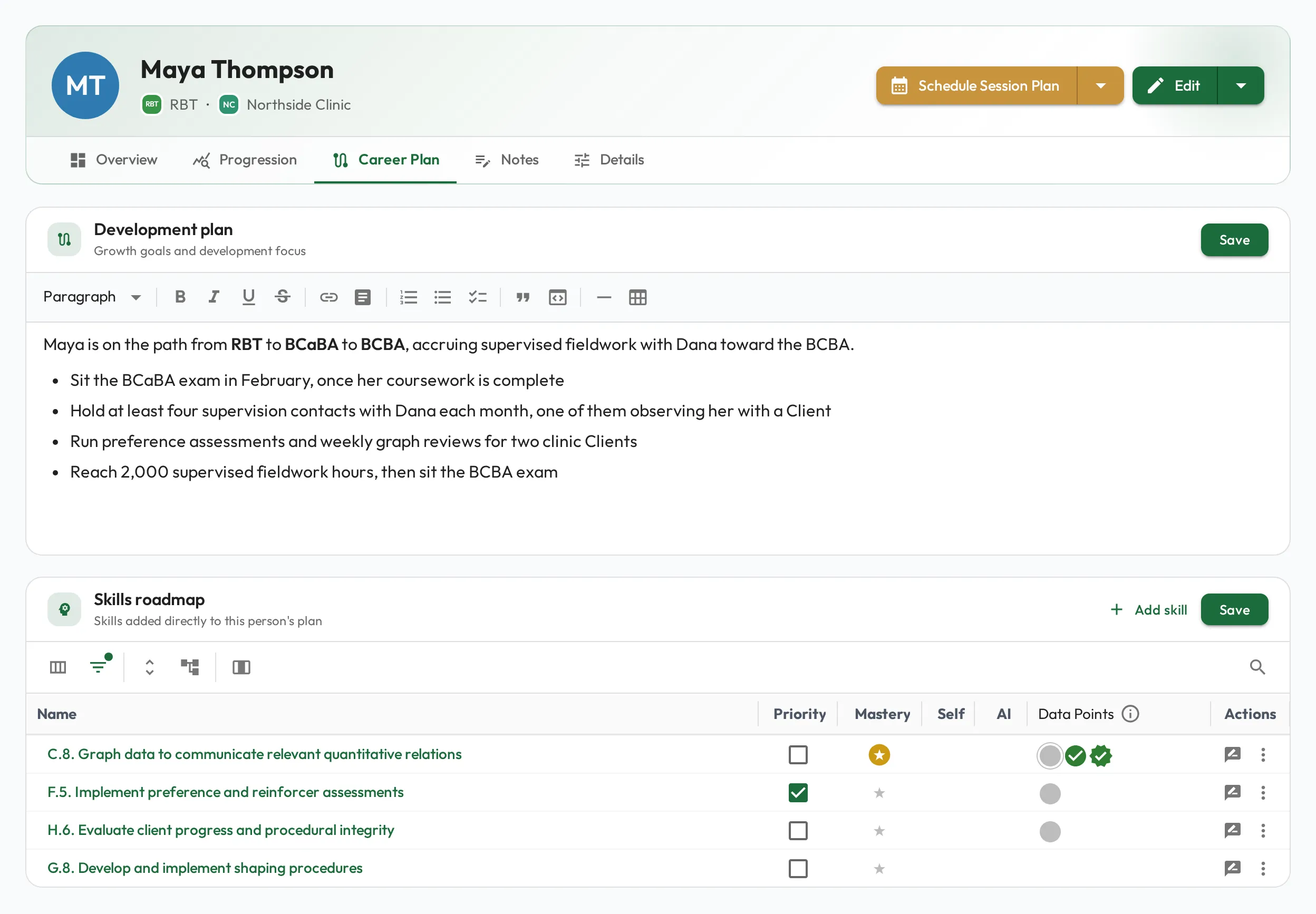
Write the development plan. On the person’s Career Plan tab, the Development plan is open-ended text: where they are headed, the coursework and fieldwork ahead, and how you will support it. See Career plans.
-
Add the next role’s skills early. Under Skills roadmap, select Add skill and add skills from the role they are growing toward, such as items from the BCaBA or BCBA Test Content Outline in the BACB task lists. They are assigned to this person directly, apart from the skills their current role requires, and you can pick them in any Session Plan with them, so you can start assessing next-role expectations now.
-
Supervise and score them like any other skill. In routine supervision, score the next-role skills as they come up. Readiness builds observation by observation.
-
Start their fieldwork. When they begin accruing fieldwork hours, set Pursuing BACB Certification on their profile so the BACB Fieldwork Report checks their months against the right requirements. See A trainee’s fieldwork month.
-
Promote on evidence. When someone is proficient in their current role’s skills and shows solid mastery of the next role’s, the case is already made, backed by observations rather than impression. When they certify, update their Qualification.
Track readiness over time
Section titled “Track readiness over time”The Skills roadmap shows mastery building on the next-role skills, one observation at a time. At review time, that history turns “are they ready?” into a question you can answer from the record. See Performance reviews.